
Concrete Slab Calculator
Professional Volume Estimator for Construction Projects
Slab Dimensions
Add extra concrete to account for spillage, uneven surfaces, and over-excavation
Your Concrete Estimate
This includes 5% waste factor for spillage and variations. Always confirm measurements on-site before ordering.
Concrete Slab Calculator
Planning a concrete project without knowing the exact amount of material needed is one of the fastest ways to waste money, delay work, and create structural problems. Whether you are pouring a backyard patio, building a driveway, or preparing a foundation base, precise estimation is the foundation of a successful job.
This is where a concrete slab calculator becomes an essential tool. Professionals in construction rely on it every day because it removes guesswork and provides accurate volume estimates within seconds.
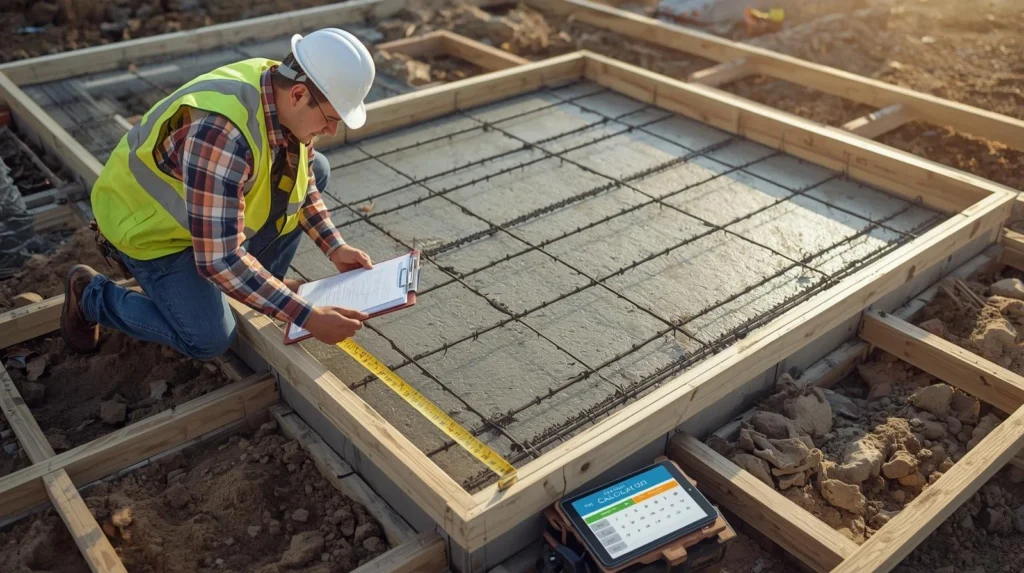
Understanding how to use this tool properly can save time, reduce expenses, and help ensure that your slab remains strong and durable for decades.
Understanding the Purpose of a Concrete Slab Calculator
A concrete slab calculator is designed to determine how much concrete is required to fill a flat surface area with a specific thickness. Instead of performing complex conversions manually, the tool automatically calculates the volume based on the measurements you provide.
It converts length, width, and depth into practical units commonly used by concrete suppliers. In the United States, concrete is typically ordered in cubic yards, so the calculator performs all necessary unit conversions instantly.
This tool is valuable for both homeowners and professional contractors because it prevents under-ordering or purchasing unnecessary extra material.
Why Accurate Concrete Estimation Is Critical
Concrete work is expensive and time-sensitive. Once the pouring process begins, there is little room for mistakes.
Ordering too little concrete can cause interruptions, forcing crews to stop mid-pour. This creates weak seams in the slab that may lead to cracks later.
Ordering too much leads to wasted money because leftover concrete cannot be stored for future use.
Precise calculations also help you plan labor, schedule delivery trucks correctly, and maintain consistent slab strength.
How Concrete Volume Is Calculated
Concrete volume is based on a simple principle: measuring the space the material will occupy.
The calculation involves multiplying three factors:
Length of the slab area
Width of the slab area
Thickness of the slab
Once these values are entered, the calculator converts the total volume into cubic yards, which is the standard unit used by suppliers.
Because the conversion process is handled automatically, the risk of mathematical errors is greatly reduced.
Standard Measurement Units Used in Concrete Projects
In the United States construction industry, measurements follow a consistent format.
Length and width are usually measured in feet, while thickness is measured in inches. The final volume is converted into cubic yards.
Understanding these units is important because entering incorrect measurement formats can lead to major estimation errors.
Step-by-Step Process to Use a Concrete Slab Calculator Correctly
Using the calculator properly ensures accurate results.
First, measure the total length of the area where the slab will be poured. Next, measure the width from one side to the other.
After that, determine the required slab thickness based on the type of project.
Once these measurements are entered into the tool, the calculator will instantly provide the required concrete volume.
Most tools also recommend adding a small extra percentage to account for uneven surfaces and minor losses during pouring.
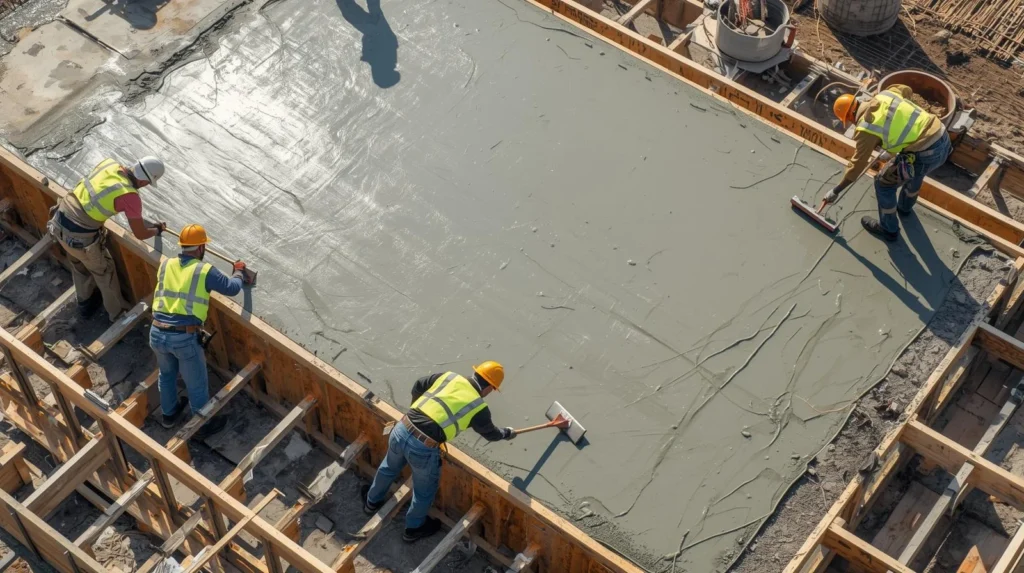
Choosing the Correct Slab Thickness for Different Projects
Thickness plays a major role in determining slab durability.
For patios and walkways, a four-inch slab is usually sufficient because these areas experience light loads.
Driveways require greater strength, so they typically range between five and six inches thick.
Garage floors and foundation bases often require six inches or more to support heavier loads.
Selecting the appropriate thickness ensures the slab can withstand pressure without cracking.
How Professionals Handle Irregular Slab Shapes
Not every project involves a perfect rectangle.
When dealing with irregular areas, experienced contractors divide the surface into smaller regular shapes. Each section is calculated individually, and the results are added together to determine the total concrete volume.
This method ensures accuracy even when working with complex layouts.
The Importance of Adding a Waste Margin
Even the most precise calculations cannot account for every real-world variable.
Concrete may spill during transport or pouring. Ground surfaces may not be perfectly level. Some material may be absorbed into base layers.
Because of these factors, experts always recommend ordering extra concrete beyond the calculated amount.
A common practice is to add between five and ten percent to the total estimate.

Factors That Influence Concrete Cost Estimates
Concrete pricing varies depending on several conditions.
Location plays a significant role because transportation costs affect delivery charges.
The strength rating of the concrete mix also influences price, with higher-strength mixes costing more.
Additional factors include labor rates, reinforcement materials, site preparation, and accessibility of the project area.
Using a slab calculator helps estimate costs more accurately by providing precise volume requirements.
Benefits of Using an Online Concrete Estimation Tool
Modern calculators offer advantages that manual calculations cannot match.
They provide instant results, eliminate conversion errors, and allow quick adjustments if measurements change.
Many also include cost estimation features, making budgeting much easier.
Because they are accessible on mobile devices, contractors can use them directly at job sites.
Common Mistakes That Lead to Incorrect Concrete Estimates
One of the most frequent errors is entering incorrect measurement units.
Another common mistake is forgetting to include the waste margin, which often results in material shortages during pouring.
Some users also overlook base layers such as gravel or sand, which can affect the final slab thickness.
Accurate measurements and careful input are essential for reliable results.
Professional Tips for Achieving Precise Concrete Calculations
Experienced contractors follow several best practices.
They measure the area multiple times to ensure accuracy. They check ground level conditions before calculating slab depth.
They also verify local building codes to confirm minimum thickness requirements.
These steps help ensure both structural safety and cost efficiency.

How Concrete Strength Ratings Affect Slab Planning
Concrete strength is measured in pounds per square inch. Higher ratings indicate stronger material capable of supporting heavier loads.
For residential projects, moderate strength levels are usually sufficient. Heavy-duty applications require higher ratings to prevent long-term damage.
Selecting the correct strength level ensures durability and prevents early cracking.
Modern Features Available in Advanced Slab Calculators
Today’s digital tools offer more than basic volume calculations.
Some provide multi-shape support, cost breakdowns, reinforcement estimation, and project planning features.
These enhancements make the tool valuable for both small residential projects and large construction work.

FAQs About concrete slab calculator
How accurate are concrete slab calculators?
When measurements are entered correctly, they provide highly reliable estimates suitable for ordering materials.
How much extra concrete should be ordered?
Most professionals recommend adding five to ten percent to account for waste and uneven ground conditions.
Can the calculator be used for foundation slabs?
Yes, it can estimate concrete for any flat slab, including foundations.
Is it difficult to use a slab calculator?
No, it requires only basic measurements and produces results instantly.
Why is slab thickness important?
Proper thickness ensures the slab can support weight without cracking or weakening.
Final Thoughts
A successful concrete project begins with accurate planning. Using a concrete slab calculator removes uncertainty, provides precise volume estimates, and helps control costs effectively.
By understanding how to measure correctly, choosing the right thickness, and adding an appropriate safety margin, you can ensure that your slab remains durable, stable, and long-lasting.
Whether you are a homeowner working on a small patio or a contractor managing a large construction project, this tool remains one of the most reliable resources for achieving professional results.